
If you’ve ever looked at a boarding pass and wondered why some airport codes make perfect sense (like JFK for New York’s John F. Kennedy International) while others seem totally random — hello, ORD for Chicago O’Hare — you’re not alone. Those three little letters — called IATA codes — have a fascinating history that mixes geography, aviation standards, and a bit of old-school logistics.
🕰️ From Two Letters to Three Letters
Before commercial air travel became global, U.S. weather stations used two-letter codes to identify locations. Many early airports simply adopted those same codes.
But as aviation expanded and more airports opened, two-letter combinations ran out. The International Air Transport Association (IATA) moved to a three-letter system, giving us thousands of combinations.
🌆 So Why “LAX” Instead of “LAL” or Just “LA”?
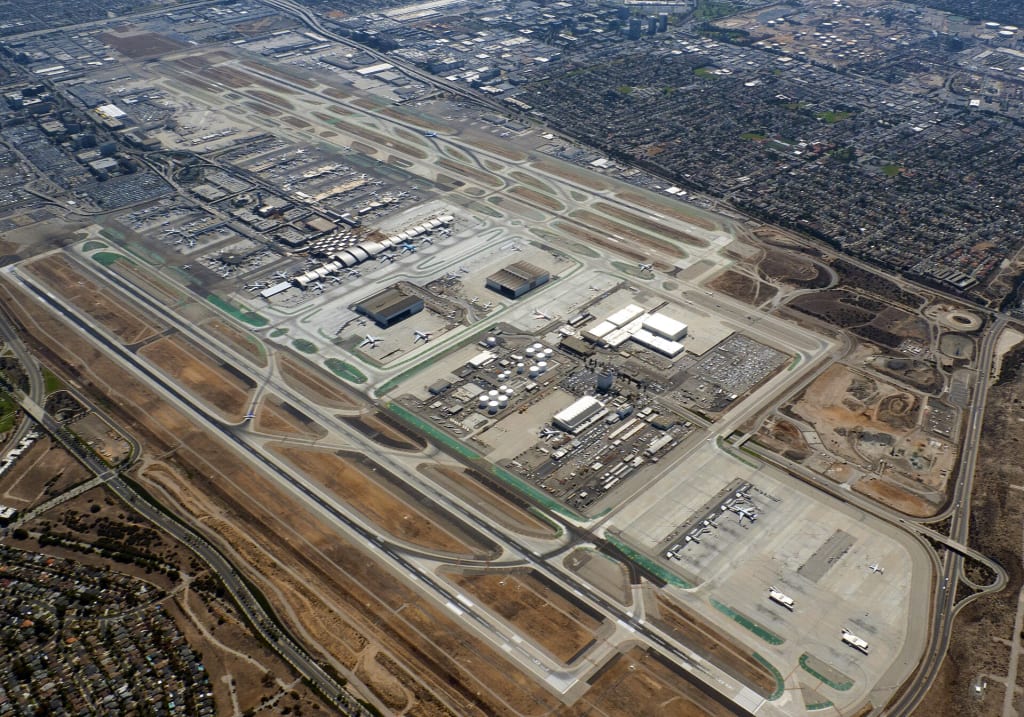
When Los Angeles International Airport (originally known as Los Angeles Municipal Airport) needed a three-letter code, it began with the two-letter code “LA.”
When three letters became the standard, many airports with existing two-letter codes simply had an “X” appended as a placeholder.
That’s how “LA” became “LAX.” The “X” doesn’t stand for anything in particular—it’s just there to fill the space.
Over time, the code “LAX” became part of the airport’s branding—short, bold, and unmistakably tied to Los Angeles.

🧩 Other Quirky Airport Codes & What They Mean

- ORD – Chicago O’Hare International Airport comes from its original name Orchard Field.
- YYZ – Toronto Pearson International Airport starts with “Y” because Canadian airports inherited codes from radio-station designations.
- SFO – San Francisco International Airport kept it simple, but the “O” was added to distinguish it from other “SF” codes.
- CDG – Charles de Gaulle Airport in Paris uses the initials of “Charles de Gaulle”.
These anomalies show how the code system reflects history, geography, and practical constraints far more than neat logic.
🧠 Fun Fact: Why It Matters
These three-letter codes are more than just ticket labels. They’re used in flight planning, airline reservations, baggage-routing systems, and even emergency procedures.
In other words, when you play our “Guess the Airport” game, you’re tapping into a global system that helps keep millions of flights organized every year!
🌍 So Next Time You See “LAX”…

…remember: it’s not random. It’s a tiny historical time capsule from aviation’s early days—a mix of legacy systems, practical expansion, and a dash of branding flair. That “X”? Just a placeholder that stuck around and became iconic.
🎮 Ready to test your airport-code knowledge?
Play our Guess the Airport quiz game →
Can you recognize the airport before the code even shows up? Maybe that extra “X” will give you a hint next time.